
Agentic Commerce: Why 2026 is the Year AI Starts Doing the Shopping for You
![[HERO] Agentic Commerce: Why 2026 is the Year AI Starts Doing the Shopping for You](https://cdn.marblism.com/a8dS0M7uxKW.webp)
If you've been watching the digital marketing space closely, you'll have noticed something fundamental shifting in 2026. Your customers aren't searching the same way they used to. They're not clicking through five websites to compare products. They're not reading endless reviews or checking three different tabs for the best price.
They're letting AI do it for them.
This is agentic commerce, and it's not some distant future concept anymore. It's happening right now, and if your business isn't prepared for it, you're about to become invisible to a rapidly growing segment of buyers.
What Actually Is Agentic Commerce?
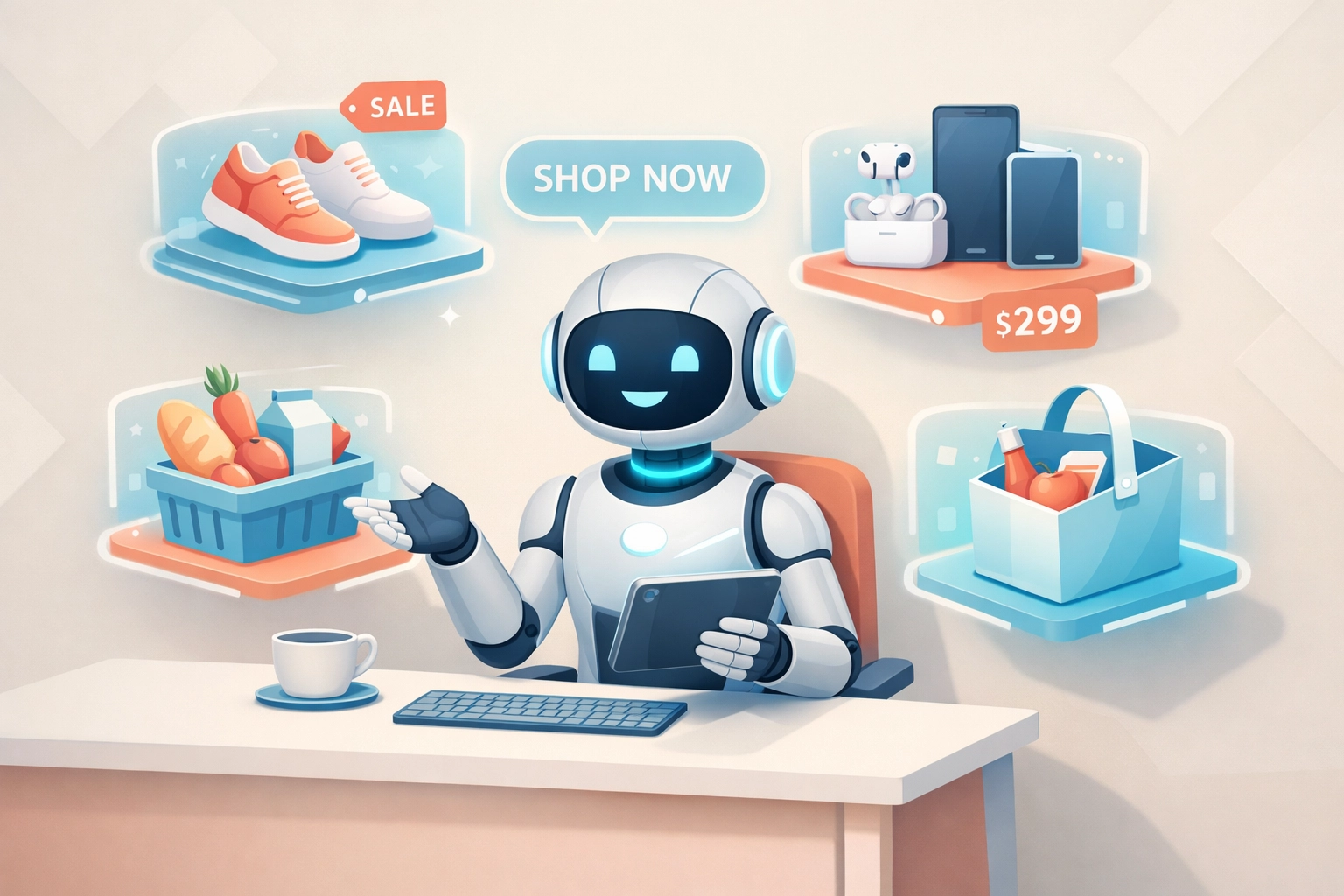
Let's cut through the jargon. Agentic commerce means AI agents – think ChatGPT, Google's Gemini, or Amazon's Rufus – are now handling the entire shopping journey on behalf of users. Instead of a customer typing "best running shoes under £100" into Google and clicking through results, their AI assistant does the legwork.
The agent compares prices across retailers, checks review sentiment, monitors real-time inventory, scans return policies, and can even complete the purchase autonomously using systems like OpenAI's Instant Checkout or Google's Universal Commerce Protocol (UCP).
Your customer gives a brief. The AI does the rest.
This isn't about chatbots answering questions on your website. This is about AI agents that live outside your ecosystem, deciding whether your products even get recommended in the first place.
Why 2026 Is the Tipping Point (Not 2025, Not 2027)
You might be wondering why now. AI shopping assistants have been around for a while, so what makes 2026 different?
The infrastructure finally exists across the entire commerce stack.
Google launched agentic shopping and checkout systems. Amazon's Rufus expanded to over 250 million customers, with interactions jumping 210% year-over-year. Shopify built cross-merchant cart infrastructure. Visa, Mastercard, and Stripe all introduced agent-capable payment frameworks. Meta announced agentic shopping tools as a core focus.
When discovery, evaluation, and transaction systems all move in the same direction simultaneously, the shift stops being theoretical. Traffic from AI sources has surged 1,200% for retailers while traditional search traffic declined 10% year-over-year. Nearly 6% of all searches now flow through AI-powered answer engines, and consumer adoption sits at 39% with traffic growth of 805%.
This isn't a trend. It's a migration.
How Agentic AI Actually Changes the Shopping Journey
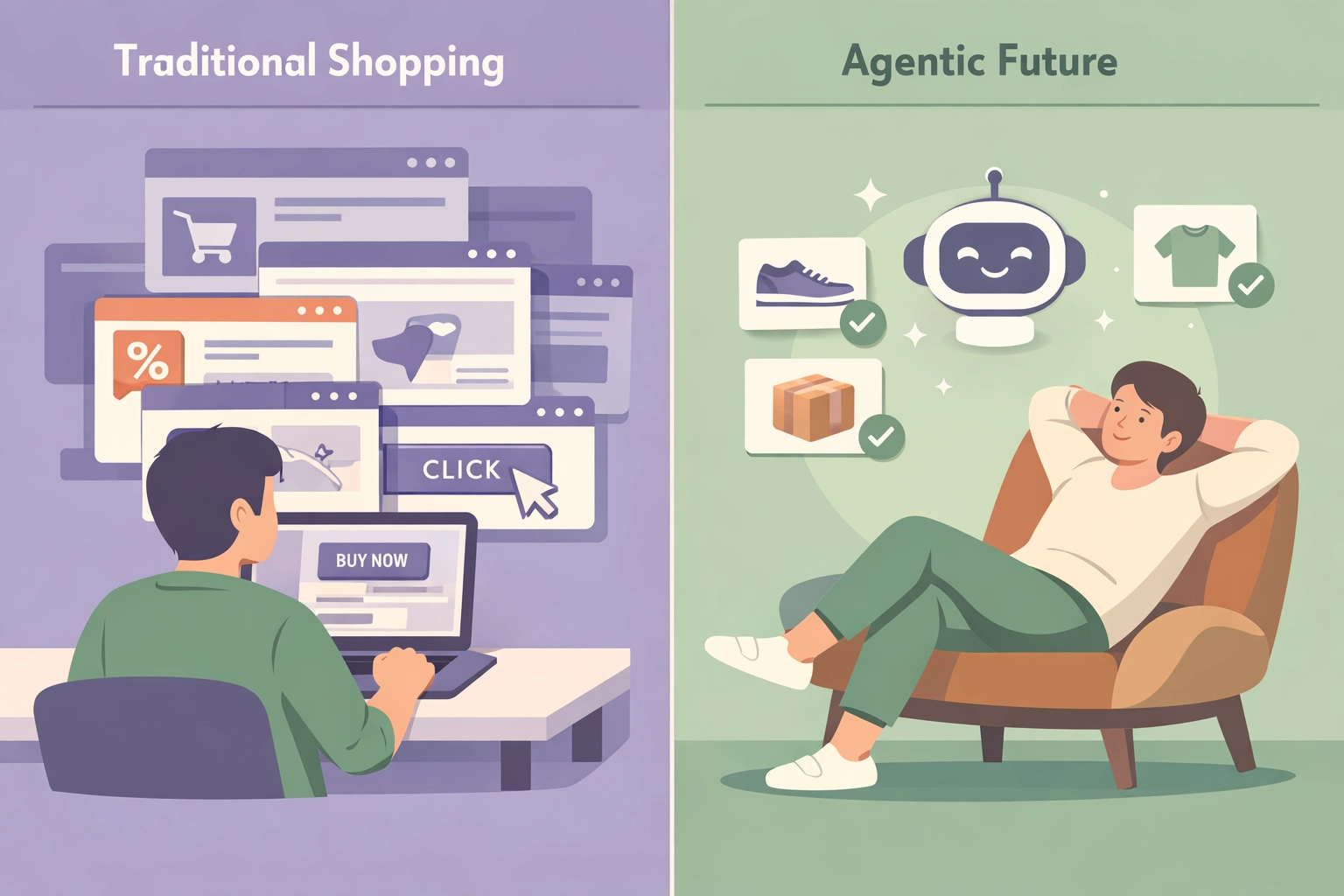
Here's what's really happening under the hood. Traditional e-commerce looks like this:
- Customer has a need
- Customer searches Google
- Customer clicks through multiple websites
- Customer compares options manually
- Customer reads reviews
- Customer checks prices
- Customer makes a purchase
Agentic commerce looks like this:
- Customer tells their AI agent what they need
- AI handles discovery, comparison, validation, and purchase
- Customer reviews the recommendation and confirms
The entire middle of the funnel has been delegated to AI. Your beautifully designed product pages, your carefully crafted copy, your email sequences – they might never be seen if an AI agent decides you're not worth recommending.
The tasks migrating to AI first are those that are time-intensive but low-risk: price comparisons, credibility checks, return policy scanning, and review validation. Agentic AI is proving especially effective at planning-oriented and repeatable decisions like outfit building, seasonal refreshes, and weekly grocery shopping.
Customers using AI shopping assistants like Amazon's Rufus are 60% more likely to convert. Why? Because by the time they're presented with an option, the heavy lifting is done. The recommendation is personalised, validated, and ready to buy.
What This Means for Your Business (Especially If You're in Kent)
If you're running a business in Kent – whether you're a retailer, a hospitality brand, or a service provider – this shift has massive implications for how you approach digital marketing.
Traditional SEO was about ranking for keywords so humans could find you. Agentic SEO is about being discoverable and recommendable to AI agents. That's a fundamentally different game.
If you've been working with an SEO agency in Kent that's still optimising purely for human searchers, you're already behind. The same goes for PPC. Google's moving from keyword bidding to "Direct Offers" aimed at high-intent AI agents. ChatGPT just launched ads. The platforms where buying decisions are being made are changing, and your ad strategy needs to change with them.
A digital marketing agency in Kent that understands agentic commerce knows this isn't just about keywords anymore. It's about structured data, real-time inventory feeds, review sentiment optimisation, and making your product information machine-readable at scale.
How to Make Your Business "Agent-Ready"
So what do you actually need to do? Here are the practical steps:
1. Perfect Your Structured Data
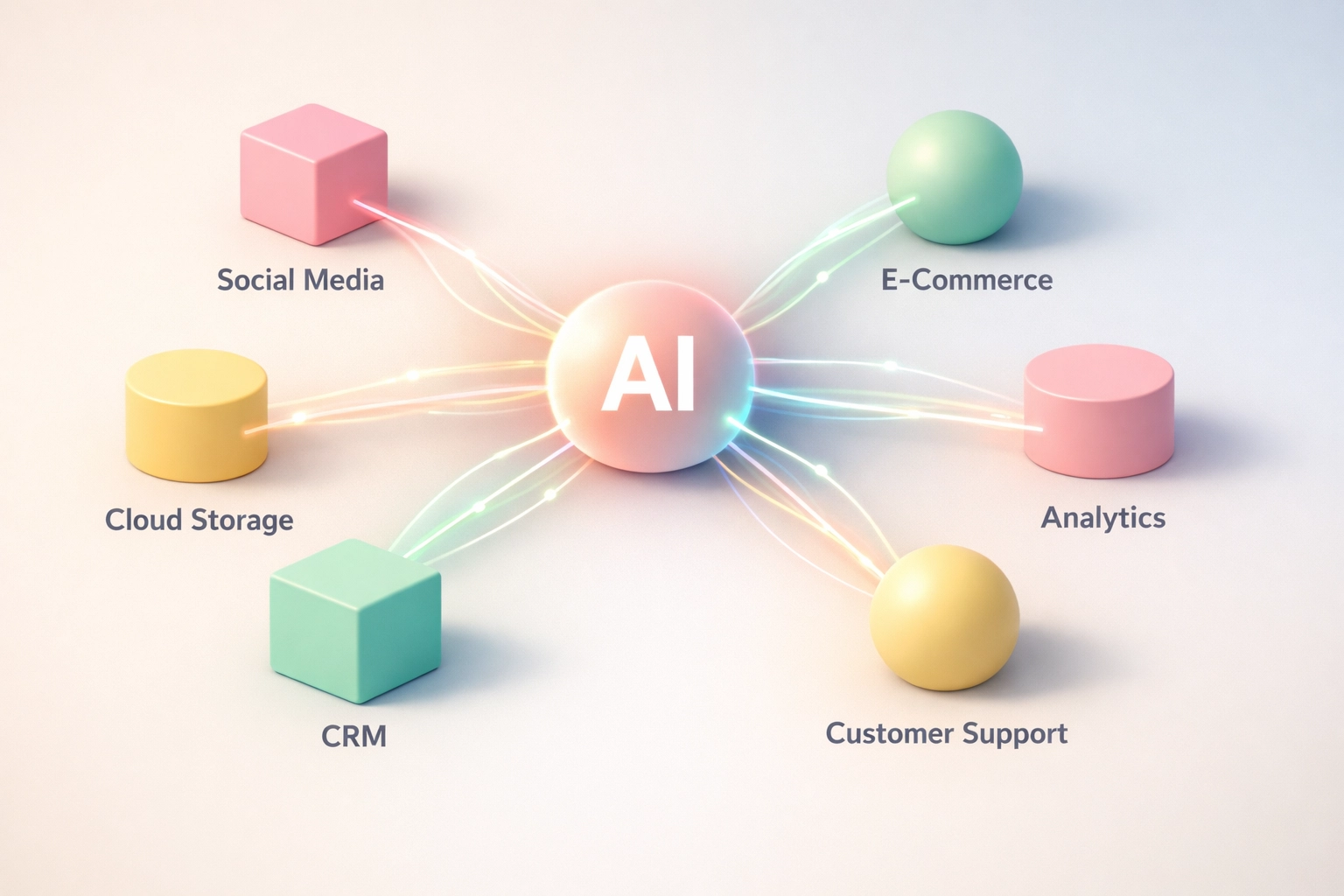
AI agents don't "browse" your website the way humans do. They read schema markup and structured data feeds. If your product information isn't perfectly tagged with schema.org markup, you're invisible to agents. This includes pricing, availability, reviews, specifications, and return policies.
2. Optimise Your Product Data in Real-Time
Static product pages aren't enough anymore. AI agents pull real-time inventory levels, pricing updates, and delivery estimates. If your data isn't synced live, the agent will skip you for a competitor who has their systems in order.
Multi-agent systems that are properly implemented deliver up to 60% fewer errors, 40% faster execution, and 25% lower operating costs. But only if your backend can keep up.
3. Focus on Review Quality and Sentiment
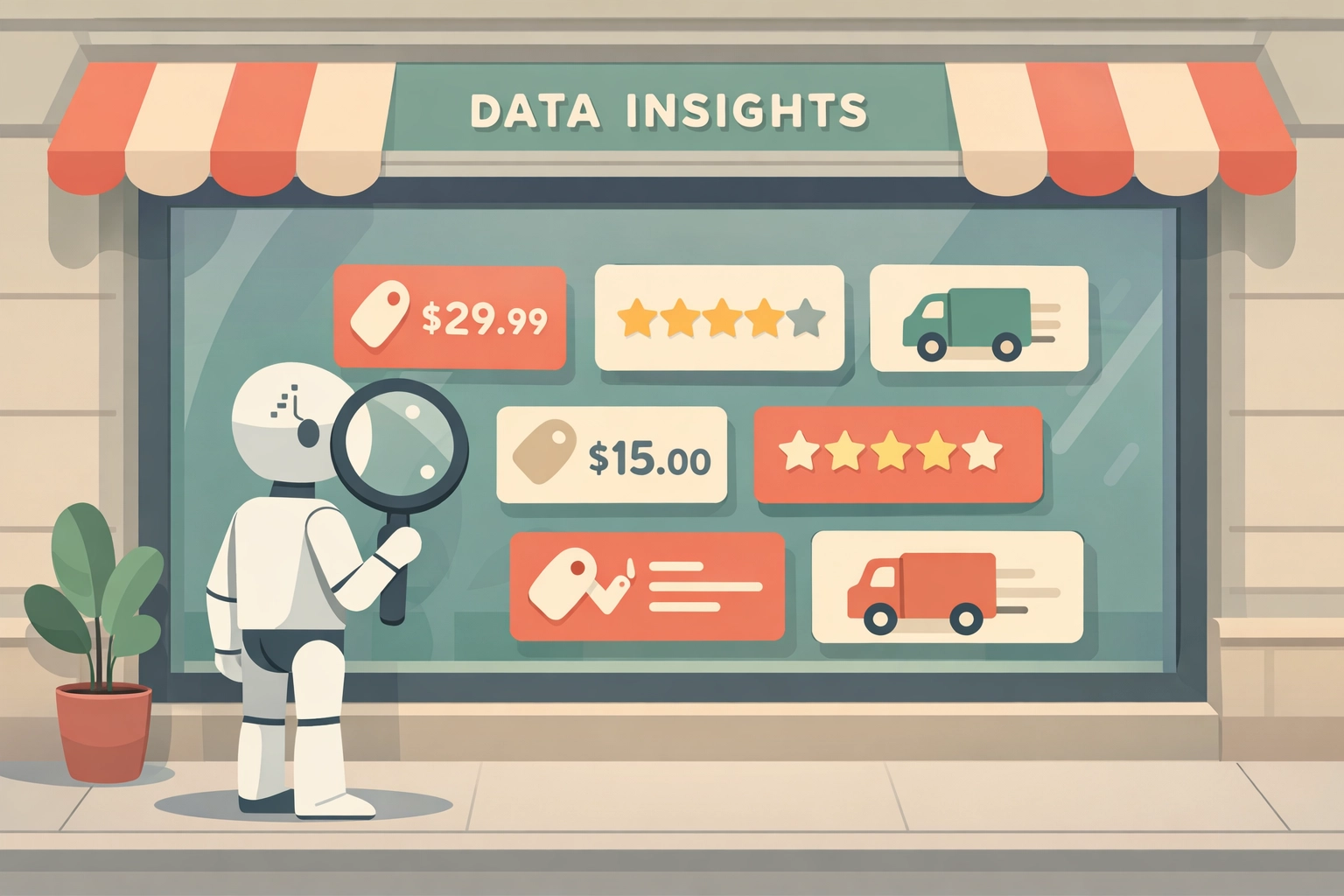
AI agents analyse review sentiment at scale. They're not just counting stars – they're reading the actual content and identifying patterns. A few well-written, detailed reviews matter more than a hundred generic five-star ratings. Encourage customers to leave specific, helpful feedback.
4. Make Your Brand Recommendable, Not Just Discoverable
This is the crucial shift. Traditional SEO was about being found. Agentic commerce is about being recommended. That means your brand needs:
- Clear value propositions that AI can parse and compare
- Transparent pricing with no hidden fees
- Reliable stock levels
- Fast, verifiable delivery promises
- Strong return policies
If an AI agent has to work hard to figure out why you're a good choice, it won't. It'll recommend someone easier to explain.
5. Rethink Your Paid Strategy
PPC agencies in Kent need to be thinking beyond Google Search ads. Where are the AI agents making recommendations? ChatGPT has ads now. Google's testing Direct Offers. You need to be present in the platforms where autonomous purchase decisions are happening, not just where people are searching.
The Skills Gap (And Why Most Agencies Aren't Ready)
Here's the uncomfortable truth: most digital marketing agencies haven't adapted to this shift yet. They're still running campaigns and strategies designed for 2022. They're optimising for keywords, not for AI recommendability. They're tracking clicks, not agent interactions.
The agencies that succeed in 2026 and beyond are the ones that understand data is now the foundation of discoverability. If your analytics aren't set up to track AI-driven traffic sources, you're flying blind. If your product feeds aren't optimised for machine reading, you're invisible.
This is why choosing the right digital marketing agency in Kent matters more than ever. You need partners who understand not just how search works today, but how buying decisions are being made in an agentic commerce world.
What Won't Change (Yet)
Before you panic and rebuild everything, there's nuance here. Agentic AI will remain underdeveloped through 2026 for fully autonomous, end-to-end shopping in complex, high-stakes purchases – particularly those touching identity, health, or finances where consumers want to remain in the loop.
People aren't letting AI agents autonomously book their holidays or choose their mortgages yet. The middle-of-the-road, repeat purchases are migrating fast, but high-consideration buying still involves humans.
Your beautiful brand storytelling still matters. Your customer service still matters. Your actual product quality absolutely still matters. But the path to being considered in the first place is changing, and if you're not on that path, none of the rest matters.
The Bottom Line for Kent Businesses
If you're a business in Kent competing locally or nationally, you're facing a choice: adapt to agentic commerce now, or watch your competitors become the default recommendations while you wonder where your traffic went.
This isn't about chasing every new trend. This is about recognising a fundamental shift in how people shop and making sure your business stays visible through the transition. The infrastructure is here. The adoption is accelerating. The question isn't whether this will affect your business – it's whether you'll be ready when it does.
Need help making your business agent-ready? Get in touch with our team at Discoverable. We're helping Kent businesses navigate agentic commerce with practical, no-nonsense strategies that actually work in 2026.
